
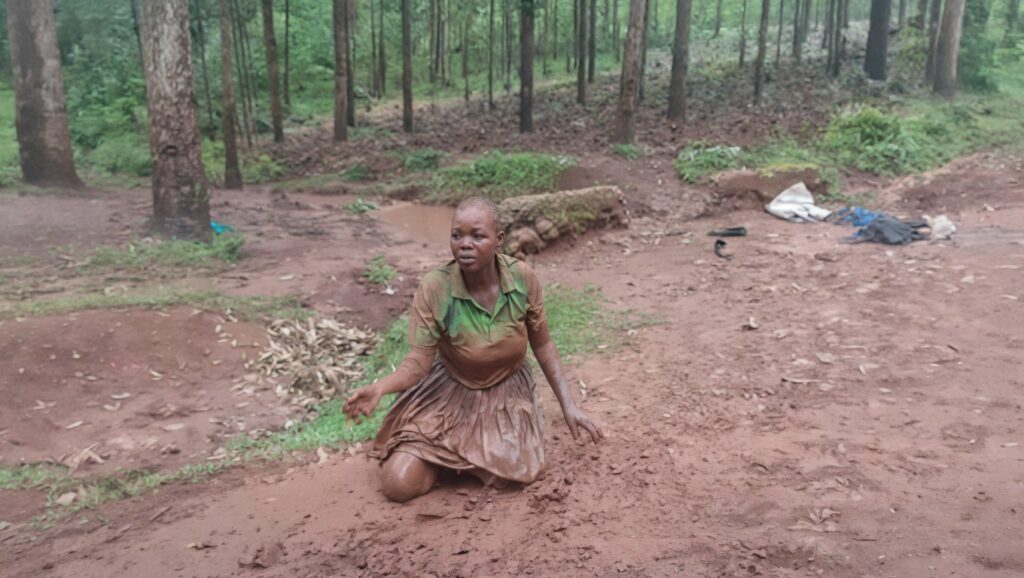
A heartbreaking video from rural Kenya is blowing up online, and it’s leaving people furious, sad, and divided all at once. In the clip, a middle-aged woman is down on her knees in thick, wet mud, her clothes ruined, her face full of shame and exhaustion. She’s gesturing desperately as if trying to explain herself. Why? Because she was caught picking up firewood on private land in Bomachoge, Kisii County. The person who shared it on X didn’t mince words: “This is someone’s mother ffs!!” That one line hit hard, and now thousands are watching, sharing, and arguing about what happened.
The 17-second footage shows the woman right in the middle of a muddy field, the kind of red soil you see all over western Kenya after rain. She shifts uncomfortably on her knees, pointing around, clearly pleading her case. There’s no sound, but the visuals say everything. This wasn’t some dramatic arrest—just an ordinary mom trying to bring home a few sticks to cook dinner for her family. In many rural Kenyan homes, firewood is still the only way to boil water or make ugali. Gas and electricity? Too expensive for most.
What makes this Bomachoge incident so raw is how common the problem actually is. Kisii County is one of Kenya’s most densely populated regions. Family land has been split and split again over generations until plots are tiny—sometimes just enough for a small house and a few banana trees. With forests shrinking fast and government-protected areas off-limits, women who’ve collected firewood for decades suddenly find themselves labeled trespassers. Landowners, desperate to protect their own scraps of soil, are cracking down harder than ever. The result? Moments like this one that feel both heartbreaking and avoidable.
Social media reactions poured in almost immediately. Many called the treatment cruel: “Foraging for firewood and this is what happens? She’s somebody’s mother!” Others took a harder line on property rights: “Trespassing is trespassing—ask for permission next time.” But even the defenders admitted the kneeling part looked excessive. One local comment nailed the bigger issue: land in Kisii has become so fragmented that small disputes now explode into public humiliations. It’s not just about one woman or one plot anymore. It’s about a system where survival and strict ownership laws keep crashing into each other.
This isn’t the first time Kenya has seen rural resource clashes go viral, but the “someone’s mother” angle made this one different. In Kenyan culture, mothers and grandmothers hold a special place. Seeing one forced into the dirt over something as basic as cooking fuel feels like an attack on dignity itself. It also shines a light on the daily grind for women in these areas—they walk long distances, carry heavy loads, and still get blamed when resources run out.
The deeper story here is about poverty, population pressure, and outdated land laws. Kisii’s high birth rates combined with limited off-farm jobs mean more people fighting over less land. Climate change isn’t helping either—drier seasons mean fewer natural spots for free firewood. Government programs for tree planting and clean cookstoves exist, but they haven’t reached every village yet. Until they do, scenes like this Bomachoge video will keep appearing.
So what should happen now? Plenty of online voices are calling for the landowner to explain themselves. Others want local leaders to step in and create simple community woodlots or neighbor agreements so women don’t have to risk humiliation just to feed their families. At the very least, the conversation is forcing people to talk about balancing property rights with basic human compassion.
This viral clip isn’t just another sad story from Kenya—it’s a wake-up call about how everyday struggles in rural areas can spiral into public shame. That mother in the mud wasn’t looking for attention. She was just trying to survive another day. If the outrage leads to even one small change in how communities handle these disputes, maybe something good can come from it.
What do you think—does the landowner have a point, or was this treatment way over the line? Drop your take below and help keep the discussion going. Stories like this deserve more than just likes and shares.