
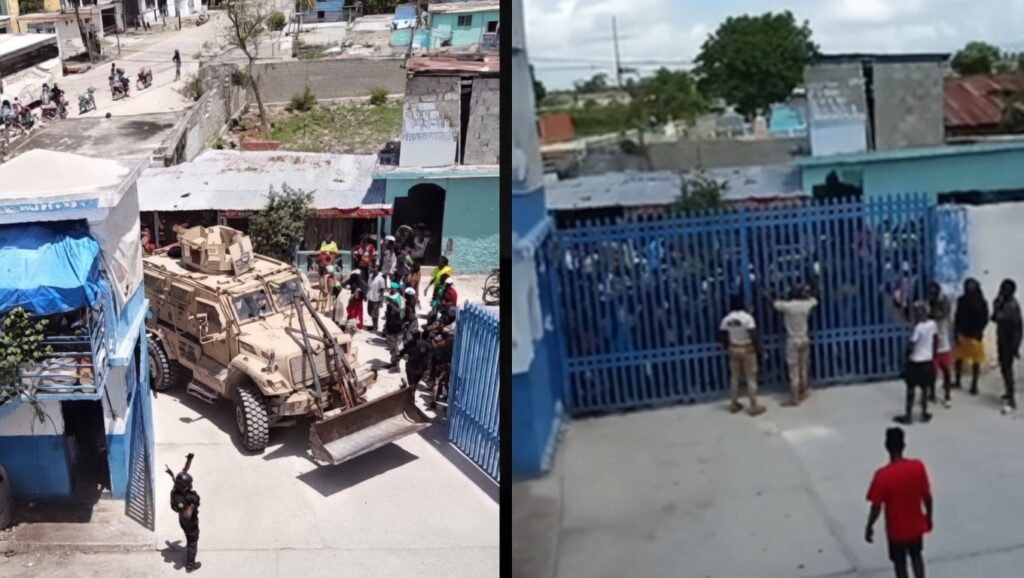
Picture this: crowded streets in Port-au-Prince, where families and everyday folks swarm around armored vehicles and buses loaded with Kenyan officers. They’re not rioting or blocking roads in anger. Instead, they’re waving signs, chanting thanks, and pleading for just a little more time. “Don’t leave us now,” the message seems to scream. These aren’t your typical protests. They’re raw, heartfelt goodbyes wrapped in fear—fear that the moment the Kenyans pull out, the gangs will tighten their grip even harder.
It’s a scene that’s been playing out in Haiti over the past few weeks, as Kenya’s landmark security mission winds down. What started as a bold international effort back in 2024 is now hitting its final chapter, with Kenyan police scheduled to fully exit by the end of April 2026. And the locals? They’re not ready to say goodbye.
A Mission Born of Desperation
Let’s rewind for a second. Haiti has been in the grip of powerful gangs for years, with groups controlling huge swaths of the capital and beyond. Kidnappings, shootings, and chaos became daily realities for millions. In a rare show of global solidarity, Kenya stepped up in 2024, leading the Multinational Security Support (MSS) mission under UN backing. Hundreds of Kenyan officers arrived to train and support Haiti’s own police, aiming to push back against the violence and bring some breathing room to neighborhoods that hadn’t known peace in ages.
It wasn’t an easy gig. The Kenyans faced tough conditions—limited resources, a complex local landscape, and gangs that didn’t exactly roll out the welcome mat. Progress came in fits and starts: some areas saw temporary calm, operations disrupted gang activities, and Haitian officers got valuable training. But critics pointed out that the mission didn’t fully turn the tide. Gangs adapted, violence lingered, and by late 2025, the decision was made to transition to something bigger and bolder.
Enter the Gang Suppression Force (GSF), the next phase. Approved by the UN Security Council, this new setup promises a beefed-up mandate—up to 5,500 troops, more independence to go after gangs directly, and contributions from countries like Chad (whose first units started arriving in early April). Kenya’s role is shifting too; while some officers may stick around briefly as a bridge, the bulk are heading home. It’s all part of a planned handoff, but for the people on the ground in Haiti, that “planned” part feels awfully sudden.
The Protests That Say “Thank You… and Please Stay”
That’s where those viral images come in—the ones showing Haitian civilians clustering around Kenyan convoys. Recent reports from Port-au-Prince describe peaceful demonstrations where residents turned out not to protest the Kenyans, but to honor them. Marchers carried signs praising the officers’ bravery. Some shared stories of how the presence of these foreign forces had made their daily commutes or market runs feel a bit safer. One local shopkeeper might tell you the Kenyans became a symbol of hope in a place where hope has been in short supply.
But beneath the gratitude runs a deep current of anxiety. Many Haitians worry that the gap between the MSS wrapping up and the GSF hitting full stride could be dangerous. Gangs have already been watching closely, and reports of ongoing clashes and displacements paint a picture of a country still on edge. Over a million people remain displaced, and the numbers of lives lost to violence are staggering. For families who’ve pinned their safety on this international help, the withdrawal feels like the rug being pulled out just as things were stabilizing a little.
It’s easy to see why. Imagine living in a neighborhood where power outages and gunfire are the norm. Then a group of determined officers from halfway across the world shows up, patrols the streets, and gives you a glimpse of normal life. You’d want them to stick around too, right? These protests aren’t about politics or blame—they’re about survival. They’re a human cry from people who’ve seen too much and are hoping the world doesn’t forget them now.
What Comes Next for Haiti?
The transition to the GSF brings fresh optimism. With a stronger mandate and more boots on the ground, there’s talk of real counter-gang operations that could finally reclaim territory. Chad’s early arrivals signal that the international community is still invested. Kenya, for its part, has defended its officers’ record fiercely, even pushing back against any unproven claims of misconduct in official letters to the UN.
Still, Haiti’s challenges run deep—poverty, weak institutions, and gangs that thrive on instability. No single mission, no matter how well-intentioned, can fix it overnight. The real test will be whether the new force can build on what the Kenyans started: training local police, disrupting gang networks, and giving civilians a fighting chance.
In the meantime, those streets in Port-au-Prince tell a powerful story. They’re a reminder that security isn’t just about numbers or mandates—it’s about trust built between people from different worlds who came together in crisis. As the last Kenyan buses roll out, Haitians are left waving goodbye with one hand and holding onto hope with the other.
Will the Gang Suppression Force deliver the lasting peace everyone desperately needs? Only time will tell. But for now, the world’s watching—and the people of Haiti are making sure their voices are heard loud and clear. In a place that’s endured so much, that quiet resilience might just be the most inspiring thing of all.
What do you think—can international missions like this truly change the game in troubled spots, or is it always a temporary bandage? Drop your thoughts in the comments.